
Accept Flexibility: Your All-Inclusive Everyday Full-Body Stretching Program for Enhanced
Our bodies can become tight, stiff, and prone to discomfort in the rush of modern life, where sedentary habits are common. Stretching, a practice that is just as important for the body as exercise, is frequently disregarded or pushed to the back burner. A regular, daily full-body stretching regimen is an important investment in your body’s longevity, mobility, and general well-being; it’s not just about touching your toes. In addition to improving posture and athletic performance, it can ease aches and even lower stress levels. In order to unlock your body’s natural flexibility and encourage a more fluid, pain-free life, this comprehensive guide will give you a detailed, approachable daily stretching routine.
Why Stretch Daily? The Unseen Benefits Unveiled
Committing to daily stretching yields a multitude of advantages that accumulate over time, fostering a healthier, more resilient you.
- Increased Range of Motion (ROM): Regular stretching helps to lengthen muscles and improve the elasticity of connective tissues around your joints, allowing for a greater freedom of movement.
- Improved Posture: Tight muscles can pull your body out of alignment. Stretching helps to release tension in areas like the chest, hip flexors, and hamstrings, promoting better posture and reducing slouching.
- Reduced Muscle Soreness and Stiffness: Stretching can help improve blood flow to muscles, which aids in nutrient delivery and waste removal, potentially reducing post-exercise soreness and everyday stiffness.
- Decreased Risk of Injury: Flexible muscles and mobile joints are less susceptible to strains, sprains, and tears during physical activity or even daily tasks.
- Enhanced Athletic Performance: For athletes, improved flexibility translates to more powerful movements, better form, and increased efficiency.
- Stress Reduction and Mental Relaxation: Stretching can be a meditative practice. Focusing on your breath and body movements helps calm the nervous system, reducing mental tension and promoting a sense of calm.
- Better Circulation: Gentle stretching can stimulate blood flow, which is beneficial for overall tissue health and recovery.
The Golden Rules of Stretching: Stretch Smart, Not Hard
Before you begin, keep these fundamental principles in mind:
- Warm Up First (Ideally): While this is a daily routine, if you’re doing it as a standalone session, a few minutes of light cardio (like marching in place or arm circles) can help warm your muscles, making them more receptive to stretching.
- Listen to Your Body: Never stretch to the point of pain. You should feel a gentle pull or tension, but never sharp pain.
- Breathe Deeply: Inhale slowly before the stretch, and exhale as you deepen into it. Deep breathing enhances relaxation and helps muscles release.
- Hold Static Stretches: For most static stretches (holding a position), aim for 20-30 seconds. For dynamic stretches (moving through a range of motion), perform 8-12 repetitions.
- Consistency is Key: Daily practice, even for short durations, is more effective than infrequent, long sessions.
- Be Patient: Flexibility gains occur gradually. Celebrate small improvements.
Your Daily Full-Body Stretching Routine
This routine is designed to be performed daily, ideally in the morning to start your day limber, or in the evening to unwind. It targets all major muscle groups.
Part 1: Upper Body and Core (Approximately 5-7 minutes)
- Neck Tilts and Rotations:
- How-to: Gently tilt your head to one side, bringing your ear towards your shoulder. Hold. Then, slowly rotate your head to look over one shoulder, hold, and then the other.
- Focus: Release tension in the neck and upper trapezius.
- Shoulder Rolls (Forward and Backward):
- How-to: Standing or seated, roll your shoulders forward in large, circular motions for several reps, then reverse and roll backward.
- Focus: Mobilize shoulder joints, relieve tension in the upper back.
- Cross-Body Arm Stretch:
- How-to: Bring one arm across your chest. Use your other hand to gently pull the arm closer to your body, feeling a stretch in your shoulder and upper back. Hold, then switch sides.
- Focus: Stretches the deltoids and upper back.
- Triceps Stretch (Overhead):
- How-to: Raise one arm overhead, bend your elbow, and let your hand fall behind your head. Use your other hand to gently push down on the elbow, feeling a stretch in your triceps. Hold, then switch sides.
- Focus: Stretches the triceps and lats.
- Chest Opener (Doorway or Standing):
- How-to: Stand in a doorway, place forearms on the frame, and gently lean forward to open your chest. Or, clasp hands behind your back, straighten arms, and lift them slightly away from your body.
- Focus: Stretches pectoral muscles, counteracting hunched posture.
- Cat-Cow Stretch:
- How-to: Start on all fours, hands under shoulders, knees under hips. Inhale as you arch your back and lift your head (Cow). Exhale as you round your spine and tuck your chin to your chest (Cat). Flow between the two.
- Focus: Mobilizes the spine, improves core awareness.
- Child’s Pose:
- How-to: Kneel on the floor, sit back on your heels, and fold your torso forward, resting your forehead on the ground. Extend your arms forward or rest them alongside your body.
- Focus: Gentle stretch for the lower back, hips, and shoulders; promotes relaxation.
Part 2: Lower Body and Hips (Approximately 7-9 minutes)
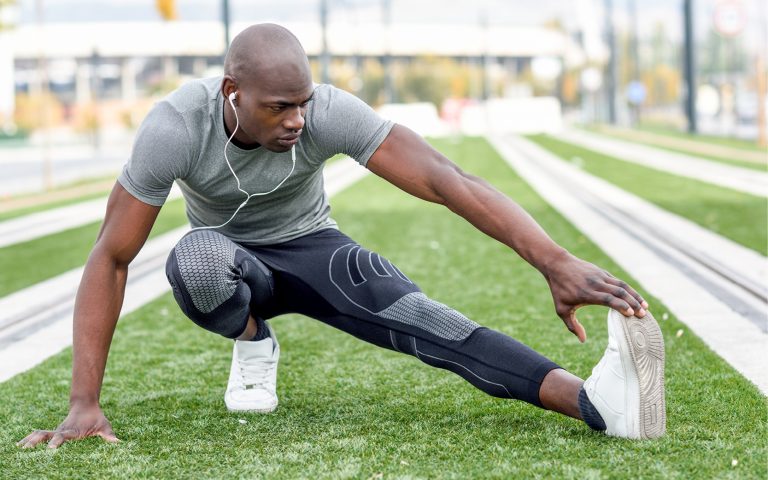
- Hamstring Stretch (Seated or Standing):
- Seated: Sit with one leg extended, reach for your toes, keeping your back relatively straight.
- Standing: Place one heel on a slightly elevated surface (like a step or low bench), keep the leg straight, and gently hinge forward at the hips.
- Focus: Stretches the hamstrings.
- Quad Stretch (Standing or Side-Lying):
- Standing: Stand tall, bend one knee, and grasp your ankle or foot, pulling your heel towards your glutes. Keep knees close together.
- Side-Lying: Lie on your side, bend top knee, grasp ankle, and pull heel towards glutes.
- Focus: Stretches the quadriceps.
- Hip Flexor Stretch (Kneeling Lunge):
- How-to: Kneel on one knee (use a pad if needed), with the other foot flat on the floor in front, knee bent at 90 degrees. Gently push your hips forward until you feel a stretch in the front of the hip of the kneeling leg. Keep your torso upright. Hold, then switch sides.
- Focus: Crucial for counteracting tightness from prolonged sitting.
- Figure-Four Stretch (Supine Glute Stretch):
- How-to: Lie on your back, knees bent, feet flat. Cross one ankle over the opposite knee. Gently pull the bottom knee towards your chest until you feel a stretch in the glute and outer hip of the crossed leg. Hold, then switch sides.
- Focus: Stretches the glutes and piriformis, improving hip external rotation.
- Inner Thigh (Adductor) Stretch (Seated Straddle or Butterfly):
- Seated Straddle: Sit on the floor with legs wide apart. Gently lean forward from your hips, keeping your back straight, reaching towards the floor.
- Butterfly: Sit with the soles of your feet together, knees out to the sides. Gently press your knees towards the floor (you can use your elbows).
- Focus: Stretches the adductor muscles of the inner thighs.
- Calf Stretch (Gastrocnemius and Soleus):
- How-to: Stand facing a wall, place hands on it. Step one foot back, keeping the heel down and leg straight (gastrocnemius). Then, bend the back knee slightly, keeping the heel down (soleus). Hold both, then switch legs.
- Focus: Stretches the major calf muscles, vital for ankle mobility.
- Ankle Circles:
- How-to: Sit or lie down, lift one foot, and gently rotate your ankle in slow, controlled circles, both clockwise and counter-clockwise. Switch sides.
- Focus: Improves ankle mobility and helps prevent stiffness.
Making It a Daily Habit: Tips for Consistency
- Set a Specific Time: Integrate stretching into your daily schedule, like first thing in the morning, before bed, or during a mid-day break.
- Create a Dedicated Space: A quiet, comfortable area can enhance the experience.
- Use Props: A yoga mat, towel, or strap can assist with deeper stretches and comfort.
- Mind-Body Connection: Use this time to tune into your body, notice areas of tension, and breathe into them.
- Vary Your Routine (Occasionally): While this is a foundational routine, feel free to explore other stretches or yoga flows to keep it engaging.
By committing to this daily full-body stretching routine, you are making a powerful investment in your body’s longevity and your overall quality of life. Embrace the fluidity, alleviate the stiffness, and discover the profound sense of ease that comes with a truly flexible and mobile body.